Showing posts with label Memoir. Show all posts

Bike Ride with Older Boys

Laura Kasischke


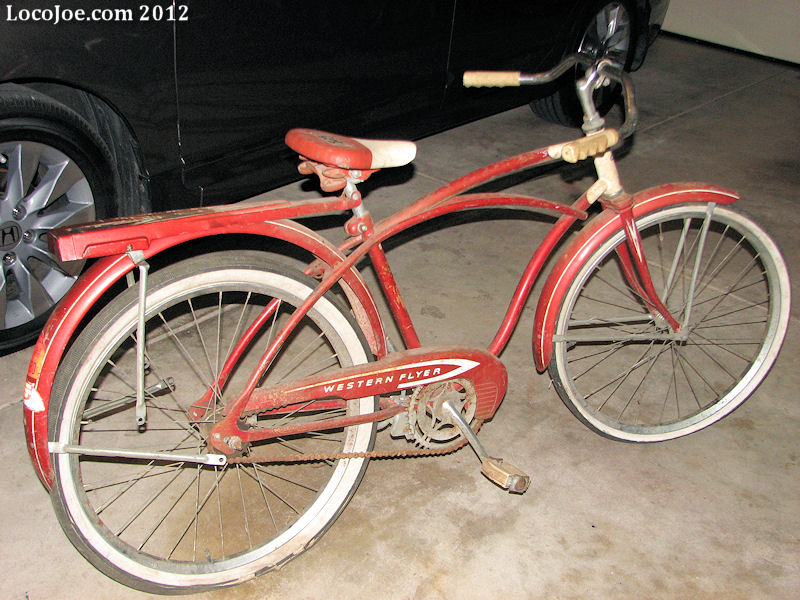
The one I didn't go on.

I was thirteen,
and they were older.
I'd met them at the public pool. I must

have given them my number. I'm sure

I'd given them my number,
knowing the girl I was. . .

It was summer. My afternoons
were made of time and vinyl.
My mother worked,
but I had a bike. They wanted

to go for a ride.
Just me and them. I said
okay fine, I'd
meet them at the Stop-n-Go
at four o'clock.
And then I didn't show.

I have been given a little gift—
something sweet
and inexpensive, something
I never worked or asked or said
thank you for, most
days not aware
of what I have been given, or what I missed—

because it's that, too, isn't it?
I never saw those boys again.
I'm not as dumb
as they think I am

but neither am I wise. Perhaps

it is the best
afternoon of my life. Two
cute and older boys
pedaling beside me—respectful, awed. When we

turn down my street, the other girls see me ...

Everything as I imagined it would be.

Or, I am in a vacant field. When I
stand up again, there are bits of glass and gravel
ground into my knees.
I will never love myself again.
Who knew then
that someday I would be

thirty-seven, wiping
crumbs off the kitchen table with a sponge, remembering
them, thinking
of this—

those boys still waiting
outside the Stop-n-Go, smoking
cigarettes, growing older.

from Dance and Disappear, 2002
University of Massachusetts Press, Amherst, MA

My Father's Hats

Mark Irwin


Sunday mornings I would reach
high into his dark closet while standing
on a chair and tiptoeing reach
higher, touching, sometimes fumbling
the soft crowns and imagine
I was in a forest, wind hymning
through pines, where the musky scent
of rain clinging to damp earth was
his scent I loved, lingering on
bands, leather, and on the inner silk
crowns where I would smell his
hair and almost think I was being
held, or climbing a tree, touching
the yellow fruit, leaves whose scent
was that of clove in the godsome
air, as now, thinking of his fabulous
sleep, I stand on this canyon floor
and watch light slowly close
on water I can't be sure is there.

from New Letters, Volume 66, Number 3, 2000
New Letters

The Green One Over There

Katia Kapovich


My half-brother had dark sad eyes, wheaten hair
and the same gorgeous skin his mother had.
He was cute and smart and innately kind,
unlike me at his age, according to our father.
Five years younger than me,
Tim attracted all the love
my father had frozen in his heart
when I was growing up.
Tim was brought up on my old books.
He did better than I with poetry,
reciting by six some “grownup” verses
which I couldn’t memorize at eleven.
At eight he wrote a poem
at the back of his math exercise book
and forgot about it.
It was a love poem
with an underlined dedication, “To A.”
It so happened that I knew who A was.
The poem read as follows:
“I loved and missed her so much
that I forgot what she looked like,
and when she entered the classroom
in the morning, I did not recognize her.
I did not recognize her long face,
nor her slow neck, nor her skinny hands,
I had completely forgotten her green eyes.”
It was quite a work of art, in my opinion,
but I told him that to sigh about
legs and necks and eyes
was sentimental and girlish.
He listened to me with dry eyes
and then tore out the page and threw it away
into the wastebasket.
He never wrote poetry again, but I did.
At fifteen I wrote a short story
which had some success and was even
published in a teenage literary magazine
called “Asterisks.” It was around that time
that I stopped visiting my dad’s house
after I realized
that everything about this boy
put me down, humiliated me
and filled me with jealousy.
I would meet dad on one condition:
if he wanted to see me,
he had to come to my place
or to stop by at the artsy café,
where my older friend Lena and I
would go after school
to sip strawberry milkshakes.
One day my father
came to my school during class hours
to take me to a hospital: the night before
my half-brother had gotten sick.
We arrived in the middle of the doctor’s rounds.
The waiting area was noisy
and smelled of urine and medication.
Dad had gone inside,
I waited for him to call me in.
Through the door left ajar
I saw a row of iron bunks with striped mattresses.
Tim’s was next to the door.
He lay leaning on a big gray pillow,
a glass of water in his hand.
The doctor wanted him to take a pill,
but he wouldn’t hear of it.
He was willful, obstreperous,
he pushed away the hand of medicine.
“I want that ship, that ship …” he whined.
“What ship?” My father turned pale
and stared at the doctor. “Can’t you see?
The green one, over there!” cried Tim,
inserting his finger in the glass of water
where a green ship, a three-funneled steamer,
was slowly sinking at the time.

From Gogol in Rome, 2004
Salt Publishing

The Printer's Error

Aaron Fogel

Here is a poem about typographical errors.


Fellow compositors
and pressworkers!

I, Chief Printer
Frank Steinman,
having worked fifty-
seven years at my trade,
and served five years
as president
of the Holliston
Printer's Council,
being of sound mind
though near death,
leave this testimonial
concerning the nature
of printers' errors.

First: I hold that all books
and all printed
matter have
errors, obvious or no,
and that these are their
most significant moments,
not to be tampered with
by the vanity and folly
of ignorant, academic
textual editors.
Second: I hold that there are
three types of errors, in ascending
order of importance:
One: chance errors
of the printer's trembling hand
not to be corrected incautiously
by foolish professors
and other such rabble
because trembling is part
of divine creation itself.

Two: silent, cool sabotage
by the printer,
the manual laborer
whose protests
have at times taken this
historical form,
covert interferences
not to be corrected
censoriously by the hand
of the second and far
more ignorant saboteur,
the textual editor.
Three: errors
from the touch of God,
divine and often
obscure corrections
of whole books by
nearly unnoticed changes
of single letters
sometimes meaningful but
about which the less said
by preemptive commentary
the better.
Third: I hold that all three
sorts of error,
errors by chance,
errors by workers' protest,
and errors by
God's touch,
are in practice the
same and indistinguishable.

Therefore I,
Frank Steinman,
typographer
for thirty-seven years,
and cooperative Master
of the Holliston Guild
eight years,
being of sound mind and body
though near death
urge the abolition
of all editorial work
whatsoever
and manumission
from all textual editing
to leave what was
as it was, and
as it became,
except insofar as editing
is itself an error, and

therefore also divine.

from The Printer's Error, 2001
Miami University Press, Oxford, Ohio

The Summer I Was Sixteen

Geraldine Connolly

Photo Credit

The turquoise pool rose up to meet us,
its slide a silver afterthought down which
we plunged, screaming, into a mirage of bubbles.
We did not exist beyond the gaze of a boy.

Shaking water off our limbs, we lifted
up from ladder rungs across the fern-cool
lip of rim. Afternoon. Oiled and sated,
we sunbathed, rose and paraded the concrete,

danced to the low beat of "Duke of Earl".
Past cherry colas, hot-dogs, Dreamsicles,
we came to the counter where bees staggered
into root beer cups and drowned. We gobbled

cotton candy torches, sweet as furtive kisses,
shared on benches beneath summer shadows.
Cherry. Elm. Sycamore. We spread our chenille
blankets across grass, pressed radios to our ears,

mouthing the old words, then loosened
thin bikini straps and rubbed baby oil with iodine
across sunburned shoulders, tossing a glance
through the chain link at an improbable world.

from Province of Fire, 1998
Iris Press, Oak Ridge, Tenn.

Famous

Naomi Shihab Nye


The river is famous to the fish.

The loud voice is famous to silence,
which knew it would inherit the earth
before anybody said so.

The cat sleeping on the fence is famous to the birds
watching him from the birdhouse.

The tear is famous, briefly, to the cheek.

The idea you carry close to your bosom
is famous to your bosom.

The boot is famous to the earth,
more famous than the dress shoe,
which is famous only to floors.

The bent photograph is famous to the one who carries it
and not at all famous to the one who is pictured.

I want to be famous to shuffling men
who smile while crossing streets,
sticky children in grocery lines,
famous as the one who smiled back.

I want to be famous in the way a pulley is famous,
or a buttonhole, not because it did anything spectacular,
but because it never forgot what it could do.

from Words Under the Words: Selected Poems (Portland, Oregon: Far Corner Books, 1995). Copyright © 1995 by Naomi Shihab Nye. Used by permission of the author.

What's in my Journal

William Stafford


Odd things, like a button drawer. Mean
Things, fishhooks, barbs in your hand.
But marbles too. A genius for being agreeable.
Junkyard crucifixes, voluptuous
discards. Space for knickknacks, and for
Alaska. Evidence to hang me, or to beatify.
Clues that lead nowhere, that never connected
anyway. Deliberate obfuscation, the kind
that takes genius. Chasms in character.
Loud omissions. Mornings that yawn above
a new grave. Pages you know exist
but you can't find them. Someone's terribly
inevitable life story, maybe mine.

from Crossing Unmarked Snow © University of Michigan Press. Reprinted with permission

Autobiography in Five Short Chapters

Portia Nelson


I

I walk down the street.
There is a deep hole in the sidewalk
I fall in.
I am lost ... I am helpless.
It isn't my fault.
It takes me forever to find a way out.

II

I walk down the same street.
There is a deep hole in the sidewalk.
I pretend I don't see it.
I fall in again.
I can't believe I am in the same place
but, it isn't my fault.
It still takes a long time to get out.

III

I walk down the same street.
There is a deep hole in the sidewalk.
I see it is there.
I still fall in ... it's a habit.
my eyes are open
I know where I am.
It is my fault.
I get out immediately.

IV

I walk down the same street.
There is a deep hole in the sidewalk.
I walk around it.

V

I walk down another street.

The Gift

Li-Young Lee


To pull the metal splinter from my palm
my father recited a story in a low voice.
I watched his lovely face and not the blade.
Before the story ended, he'd removed
the iron sliver I thought I'd die from.

I can't remember the tale,
but hear his voice still, a well
of dark water, a prayer.
And I recall his hands,
two measures of tenderness
he laid against my face,
the flames of discipline
he raised above my head.

Had you entered that afternoon
you would have thought you saw a man
planting something in a boy's palm,
a silver tear, a tiny flame.
Had you followed that boy
you would have arrived here,
where I bend over my wife's right hand.

Look how I shave her thumbnail down
so carefully she feels no pain.
Watch as I lift the splinter out.
I was seven when my father
took my hand like this,
and I did not hold that shard
between my fingers and think,
Metal that will bury me,
christen it Little Assassin,
Ore Going Deep for My Heart.
And I did not lift up my wound and cry,
Death visited here!
I did what a child does
when he's given something to keep.
I kissed my father.