Showing posts with label Billy Collins. Show all posts

Monday

Monday - Billy Collins 
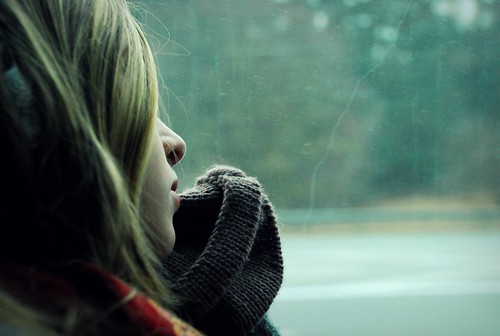

The birds are in their trees,
the toast is in the toaster,
and the poets are at their windows.

They are at their windows
in every section of the tangerine of earth-
the Chinese poets looking up at the moon,
the American poets gazing out
at the pink and blue ribbons of sunrise.

The clerks are at their desks,
the miners are down in their mines,
and the poets are looking out their windows
maybe with a cigarette, a cup of tea,
and maybe a flannel shirt or bathrobe is involved.

The proofreaders are playing the ping-pong
game of proofreading,
glancing back and forth from page to page,
the chefs are dicing celery and potatoes,
and the poets are at their windows
because it is their job for which
they are paid nothing every Friday afternoon.

Which window it hardly seems to matter
though many have a favorite,
for there is always something to see-
a bird grasping a thin branch,
the headlight of a taxi rounding a corner,
those two boys in wool caps angling across the street.

The fishermen bob in their boats,
the linemen climb their round poles,
the barbers wait by their mirrors and chairs,
and the poets continue to stare
at the cracked birdbath or a limb knocked down by the wind.

By now, it should go without saying
that what the oven is to the baker
and the berry-stained blouse to the dry cleaner,
so the window is to the poet.

Just think-
before the invention of the window,
the poets would have had to put on a jacket
and a winter hat to go outside
or remain indoors with only a wall to stare at.

And when I say a wall,
I do not mean a wall with striped wallpaper
and a sketch of a cow in a frame.

I mean a cold wall of fieldstones,
the wall of the medieval sonnet,
the original woman's heart of stone,
the stone caught in the throat of her poet-lover.

Forgetfulness

The name of the author is the first to go
followed obediently by the title, the plot,
the heartbreaking conclusion, the entire novel
which suddenly becomes one you have never read,
never even heard of,

as if, one by one, the memories you used to harbor
decided to retire to the southern hemisphere of the brain,
to a little fishing village where there are no phones.

Long ago you kissed the names of the nine Muses goodbye
and watched the quadratic equation pack its bag,
and even now as you memorize the order of the planets,

something else is slipping away, a state flower perhaps,
the address of an uncle, the capital of Paraguay.

Whatever it is you are struggling to remember,
it is not poised on the tip of your tongue,
not even lurking in some obscure corner of your spleen.

It has floated away down a dark mythological river
whose name begins with an L as far as you can recall,
well on your own way to oblivion where you will join those
who have even forgotten how to swim and how to ride a bicycle.

No wonder you rise in the middle of the night
to look up the date of a famous battle in a book on war.
No wonder the moon in the window seems to have drifted
out of a love poem that you used to know by heart.

Billy Collins

The Names

by Billy Collins

Yesterday, I lay awake in the palm of the night.
A soft rain stole in, unhelped by any breeze,
And when I saw the silver glaze on the windows,
I started with A, with Ackerman, as it happened,
Then Baxter and Calabro,
Davis and Eberling, names falling into place
As droplets fell through the dark.
Names printed on the ceiling of the night.
Names slipping around a watery bend.
Twenty-six willows on the banks of a stream.
In the morning, I walked out barefoot
Among thousands of flowers
Heavy with dew like the eyes of tears,
And each had a name --
Fiori inscribed on a yellow petal
Then Gonzalez and Han, Ishikawa and Jenkins.
Names written in the air
And stitched into the cloth of the day.
A name under a photograph taped to a mailbox.
Monogram on a torn shirt,
I see you spelled out on storefront windows
And on the bright unfurled awnings of this city.
I say the syllables as I turn a corner --
Kelly and Lee,
Medina, Nardella, and O'Connor.
When I peer into the woods,
I see a thick tangle where letters are hidden
As in a puzzle concocted for children.
Parker and Quigley in the twigs of an ash,
Rizzo, Schubert, Torres, and Upton,
Secrets in the boughs of an ancient maple.
Names written in the pale sky.
Names rising in the updraft amid buildings.
Names silent in stone
Or cried out behind a door.
Names blown over the earth and out to sea.
In the evening -- weakening light, the last swallows.
A boy on a lake lifts his oars.
A woman by a window puts a match to a candle,
And the names are outlined on the rose clouds --
Vanacore and Wallace,
(let X stand, if it can, for the ones unfound)
Then Young and Ziminsky, the final jolt of Z.
Names etched on the head of a pin.
One name spanning a bridge, another undergoing a tunnel.
A blue name needled into the skin.
Names of citizens, workers, mothers and fathers,
The bright-eyed daughter, the quick son.
Alphabet of names in a green field.
Names in the small tracks of birds.
Names lifted from a hat
Or balanced on the tip of the tongue.
Names wheeled into the dim warehouse of memory.
So many names, there is barely room on the walls of the heart.

Lines Composed Over Three Thousand Miles From Tintern Abbey


I was here before, a long time ago,

and now I am here again
is an observation that occurs in poetry
as frequently as rain occurs in life.
The fellow may be gazing
over an English landscape,
hillsides dotted with sheep,
a row of tall trees topping the downs,
or he could be moping through the shadows
of a dark Bavarian forest,
a wedge of cheese and a volume of fairy tales
tucked into his rucksack.
But the feeling is always the same.
It was better the first time.
This time it is not nearly as good.
I’m not feeling as chipper as I did back then.
Something is always missing—
swans, a glint on the surface of a lake,
some minor but essential touch.
Or the quality of things has diminished.
The sky was a deeper, more dimensional blue,
clouds were more cathedral-like,
and water rushed over rock
with greater effervescence.
From our chairs we have watched
the poor author in his waistcoat
as he recalls the dizzying icebergs of childhood
and mills around in a field of weeds.
We have heard the poets long dead
declaim their dying
from a promontory, a riverbank,
next to a haycock, within a copse.
We have listened to their dismay,
the kind that issues from poems
the way water issues forth from hoses,
the way the match always gives its little speech on fire.
And when we put down the book at last,
lean back, close our eyes,
stinging with print,
and slip in the bookmark of sleep,
we will be schooled enough to know
that when we wake up
a little before dinner
things will not be nearly as good as they once were.
Something will be missing
from this long, coffin-shaped room,
the walls and windows now
only two different shades of gray,
the glossy gardenia drooping
in its chipped terra-cotta pot.
And on the floor, shoes, socks,
the browning core of an apple.
Nothing will be as it was
a few hours ago, back in the glorious past
before our naps, back in that Golden Age
that drew to a close sometime shortly after lunch.
Billy Collins (1998, Hollander)

Days

Billy Collins


Each one is a gift, no doubt,
mysteriously placed in your waking hand
or set upon your forehead
moments before you open your eyes.

Today begins cold and bright,
the ground heavy with snow
and the thick masonry of ice,
the sun glinting off the turrets of clouds.

Through the calm eye of the window
everything is in its place
but so precariously
this day might be resting somehow

on the one before it,
all the days of the past stacked high
like the impossible tower of dishes
entertainers used to build on stage.

No wonder you find yourself
perched on the top of a tall ladder
hoping to add one more.
Just another Wednesday,

you whisper,
then holding your breath,
place this cup on yesterday's saucer
without the slightest clink.

Litany

Billy Collins

            “You are the bread and the knife,
                   The crystal goblet and the wine...”
                                —-Jacques Crickillon
 
You are the bread and the knife,
the crystal goblet and the wine.
You are the dew on the morning grass
and the burning wheel of the sun.
You are the white apron of the baker,
and the marsh birds suddenly in flight.
 
However, you are not the wind in the orchard,
the plums on the counter,
or the house of cards.
And you are certainly not the pine-scented air.
There is just no way that you are the pine-scented air.
 
It is possible that you are the fish under the bridge,
maybe even the pigeon on the general’s head,
but you are not even close
to being the field of cornflowers at dusk.
 
And a quick look in the mirror will show
that you are neither the boots in the corner
nor the boat asleep in its boathouse.
 
It might interest you to know,
speaking of the plentiful imagery of the world,
that I am the sound of rain on the roof.
 
I also happen to be the shooting star,
the evening paper blowing down an alley
and the basket of chestnuts on the kitchen table.
 
I am also the moon in the trees
and the blind woman's tea cup.
But don’t worry, I'm not the bread and the knife.
You are still the bread and the knife.
You will always be the bread and the knife,
not to mention the crystal goblet and—somehow—the wine.

Dharma

Billy Collins


The way the dog trots out the front door
every morning
without a hat or an umbrella,
without any money
or the keys to her doghouse
never fails to fill the saucer of my heart
with milky admiration.

Who provides a finer example
of a life without encumbrance—
Thoreau in his curtainless hut
with a single plate, a single spoon?
Gandhi with his staff and his holy diapers?

Off she goes into the material world
with nothing but her brown coat
and her modest blue collar,
following only her wet nose,
the twin portals of her steady breathing,
followed only by the plume of her tail.

If only she did not shove the cat aside
every morning
and eat all his food
what a model of self-containment she
would be,
what a paragon of earthly detachment.
If only she were not so eager
for a rub behind the ears,
so acrobatic in her welcomes,
if only I were not her god.

Sonnet

Billy Collins


All we need is fourteen lines, well, thirteen now,
and after this one just a dozen,
to launch a little ship on love's storm-tossed seas,
then only ten more left like rows of beans.
How easily it goes unless you get Elizabethan
and insist the iambic bongos must be played
and rhymes positioned at the ends of lines,
one for every station of the cross.
But hang on here while we make the turn,
into the final six where all will be resolved,
where longing and heartache will find an end,
where Laura will tell Petrarch to put down his pen,
take off those crazy medieval tights,
blow out the lights, and come at last to bed.

On Turning Ten

Billy Collins


       The whole idea of it makes me feel
like I'm coming down with something,
something worse than any stomach ache
or the headaches I get from reading in bad light--
a kind of measles of the spirit,
a mumps of the psyche,
a disfiguring chicken pox of the soul.

You tell me it is too early to be looking back,
but that is because you have forgotten
the perfect simplicity of being one
and the beautiful complexity introduced by two.
But I can lie on my bed and remember every digit.
At four I was an Arabian wizard.
I could make myself invisible
by drinking a glass of milk a certain way.
At seven I was a soldier, at nine a prince.

But now I am mostly at the window
watching the late afternoon light.
Back then it never fell so solemnly
against the side of my tree house,
and my bicycle never leaned against the garage
as it does today,
all the dark blue speed drained out of it.

This is the beginning of sadness, I say to myself,
as I walk through the universe in my sneakers.
It is time to say good-bye to my imaginary friends,
time to turn the first big number.

It seems only yesterday I used to believe
there was nothing under my skin but light.
If you cut me I could shine.
But now when I fall upon the sidewalks of life,
I skin my knees. I bleed.

Introduction to Poetry

Billy Collins

The Great Harry Houdini

I ask them to take a poem
and hold it up to the light
like a color slide
or press an ear against its hive.
I say drop a mouse into a poem
and watch him probe his way out,
or walk inside the poem's room
and feel the walls for a light switch.
I want them to waterski
across the surface of a poem
waving at the author's name on the shore.
But all they want to do
is tie the poem to a chair with rope
and torture a confession out of it.
They begin beating it with a hose
to find out what it really means.

The Lanyard

Billy Collins


The other day I was ricocheting slowly
off the blue walls of this room,
moving as if underwater from typewriter to piano,
from bookshelf to an envelope lying on the floor,
when I found myself in the L section of the dictionary
where my eyes fell upon the word lanyard.

No cookie nibbled by a French novelist
could send one into the past more suddenly—
a past where I sat at a workbench at a camp
by a deep Adirondack lake
learning how to braid long thin plastic strips
into a lanyard, a gift for my mother.

I had never seen anyone use a lanyard
or wear one, if that’s what you did with them,
but that did not keep me from crossing
strand over strand again and again
until I had made a boxy
red and white lanyard for my mother.

She gave me life and milk from her breasts,
and I gave her a lanyard.
She nursed me in many a sick room,
lifted spoons of medicine to my lips,
laid cold face-cloths on my forehead,
and then led me out into the airy light

and taught me to walk and swim,
and I, in turn, presented her with a lanyard.
Here are thousands of meals, she said,
and here is clothing and a good education.
And here is your lanyard, I replied,
which I made with a little help from a counselor.

Here is a breathing body and a beating heart,
strong legs, bones and teeth,
and two clear eyes to read the world, she whispered,
and here, I said, is the lanyard I made at camp.
And here, I wish to say to her now,
is a smaller gift—not the worn truth

that you can never repay your mother,
but the rueful admission that when she took
the two-tone lanyard from my hand,
I was as sure as a boy could be
that this useless, worthless thing I wove
out of boredom would be enough to make us even.