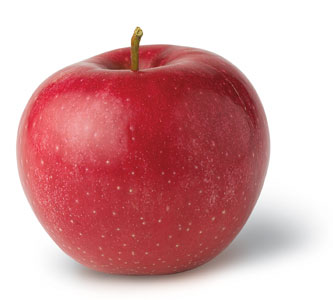
Joyce Huff
All of the saints starved themselves.
Not a single fat one.
The words “deity” and “diet” must have come from the same
Latin root.
Those saints must have been thin as knucklebones
or shards of stained
glass or Christ carved
on his cross.
Hard
as pew seats. Brittle
as hair shirts. Women
made from bone, like the ribs that protrude from his wasted
wooden chest. Women consumed
by fervor.
They must have been able to walk three or four abreast
down that straight and oh-so-narrow path.
They must have slipped with ease through the eye
of the needle, leaving the weighty
camels stranded at the city gate.
Within that spare city’s walls,
I do not think I would find anyone like me.
I imagine I will find my kind outside
lolling in the garden
munching on the apples.
From Gargoyle Magazine
Volume 44
Showing posts with label Comparison. Show all posts
Rotary
Christina Pugh
This poem is a meditation on the old fashioned rotary phones that came before the touch-tone type.
Closer to a bell than a bird,
that clapper ringing
the clear name
of its inventor:
by turns louder
and quieter than a clock,
its numbered face
was more literate,
triplets of alphabet
like grace notes
above each digit.
And when you dialed,
each number was a shallow hole
your finger dragged
to the silver
comma-boundary,
then the sound of the hole
traveling back
to its proper place
on the circle.
You had to wait for its return.
You had to wait.
Even if you were angry
and your finger flew,
you had to await
the round trip
of seven holes
before you could speak.
The rotary was weird for lag,
for the afterthought.
Before the touch-tone,
before the speed-dial,
before the primal grip
of the cellular,
they built glass houses
around telephones:
glass houses in parking lots,
by the roadside,
on sidewalks.
When you stepped in
and closed the door,
transparency hugged you,
and you could almost see
your own lips move,
the dumb-show
of your new secrecy.
Why did no one think
to conserve the peal?
Just try once
to sing it to yourself:
it's gone,
like the sound of breath
if your body left.
from Hayden's Ferry Review, Issue 27, Fall/Winter 2000-2001
Hayden's Ferry Review
This poem is a meditation on the old fashioned rotary phones that came before the touch-tone type.
Closer to a bell than a bird,
that clapper ringing
the clear name
of its inventor:
by turns louder
and quieter than a clock,
its numbered face
was more literate,
triplets of alphabet
like grace notes
above each digit.
And when you dialed,
each number was a shallow hole
your finger dragged
to the silver
comma-boundary,
then the sound of the hole
traveling back
to its proper place
on the circle.
You had to wait for its return.
You had to wait.
Even if you were angry
and your finger flew,
you had to await
the round trip
of seven holes
before you could speak.
The rotary was weird for lag,
for the afterthought.
Before the touch-tone,
before the speed-dial,
before the primal grip
of the cellular,
they built glass houses
around telephones:
glass houses in parking lots,
by the roadside,
on sidewalks.
When you stepped in
and closed the door,
transparency hugged you,
and you could almost see
your own lips move,
the dumb-show
of your new secrecy.
Why did no one think
to conserve the peal?
Just try once
to sing it to yourself:
it's gone,
like the sound of breath
if your body left.
from Hayden's Ferry Review, Issue 27, Fall/Winter 2000-2001
Hayden's Ferry Review
After Years
Ted Kooser
This is a love poem in which the poet's imagination flies far from his own experience.
Today, from a distance, I saw you
walking away, and without a sound
the glittering face of a glacier
slid into the sea. An ancient oak
fell in the Cumberlands, holding only
a handful of leaves, and an old woman
scattering corn to her chickens looked up
for an instant. At the other side
of the galaxy, a star thirty-five times
the size of our own sun exploded
and vanished, leaving a small green spot
on the astronomer's retina
as he stood on the great open dome
of my heart with no one to tell.
from Solo: A Journal of Poetry, Premiere Issue, Spring 1996
This is a love poem in which the poet's imagination flies far from his own experience.
![]() |
| Add caption |
Today, from a distance, I saw you
walking away, and without a sound
the glittering face of a glacier
slid into the sea. An ancient oak
fell in the Cumberlands, holding only
a handful of leaves, and an old woman
scattering corn to her chickens looked up
for an instant. At the other side
of the galaxy, a star thirty-five times
the size of our own sun exploded
and vanished, leaving a small green spot
on the astronomer's retina
as he stood on the great open dome
of my heart with no one to tell.
from Solo: A Journal of Poetry, Premiere Issue, Spring 1996
Watching the Mayan Women
Luisa Villani
"Selva" means forest or jungle.
I hang the window inside out
like a shirt drying in a breeze
and the arms that are missing come to me
Yes, it's a song, one I don't quite comprehend
although I do understand the laundry.
White ash and rain water, a method
my aunt taught me, but I'll never know
how she learned it in Brooklyn. Her mind
has gone to seed, blown by a stroke,
and that dandelion puff called memory
has flown far from her eyes. Some things remain.
Procedures. Methods. If you burn
a fire all day, feeding it snapped
branches and newspapers—
the faces pressed against the print
fading into flames-you end up
with a barrel of white ash. If
you take that same barrel and fill it
with rain, let it sit for a day,
you will have water
that can bring brightness to anything.
If you take that water,
and in it soak your husband's shirts,
he'll pause at dawn when he puts one on,
its softness like a haunting afterthought.
And if he works all day in the selva,
he'll divine his way home
in shirtsleeves aglow with torchlight.
from Hayden's Ferry Review, Issue 26, Spring / Summer 2000
Arizona State University, Tempe, AZ
"Selva" means forest or jungle.
I hang the window inside out
like a shirt drying in a breeze
and the arms that are missing come to me
Yes, it's a song, one I don't quite comprehend
although I do understand the laundry.
White ash and rain water, a method
my aunt taught me, but I'll never know
how she learned it in Brooklyn. Her mind
has gone to seed, blown by a stroke,
and that dandelion puff called memory
has flown far from her eyes. Some things remain.
Procedures. Methods. If you burn
a fire all day, feeding it snapped
branches and newspapers—
the faces pressed against the print
fading into flames-you end up
with a barrel of white ash. If
you take that same barrel and fill it
with rain, let it sit for a day,
you will have water
that can bring brightness to anything.
If you take that water,
and in it soak your husband's shirts,
he'll pause at dawn when he puts one on,
its softness like a haunting afterthought.
And if he works all day in the selva,
he'll divine his way home
in shirtsleeves aglow with torchlight.
from Hayden's Ferry Review, Issue 26, Spring / Summer 2000
Arizona State University, Tempe, AZ
Dandelion
Julie Lechevsky
My science teacher said
there are no monographs
on the dandelion.
Unlike the Venus fly-trap
or Calopogon pulchellus,
it is not a plant worthy of scrutiny.
It goes on television
between the poison squirt bottles,
during commercial breakaways from Ricki Lake.
But that's how life
parachutes
to my home.
Home,
where they make you do
what you don't want to do.
Moms with Uzis of reproach,
dads with their silencers.
(My parents watch me closely because I am their jewel.)
So no one knows how strong
a dandelion is inside,
how its parts stick together,
bract, involucre, pappus,
how it clings to its fragile self.
There are 188 florets in a bloom,
which might seem a peculiar number,
but there are 188,000 square feet
in the perfectly proportioned Wal-Mart,
which allows for circulation
without getting lost.
I wish I could grow like a dandelion,
from gold to thin white hair,
and be carried on a breeze
to the next yard.
My science teacher said
there are no monographs
on the dandelion.
Unlike the Venus fly-trap
or Calopogon pulchellus,
it is not a plant worthy of scrutiny.
It goes on television
between the poison squirt bottles,
during commercial breakaways from Ricki Lake.
But that's how life
parachutes
to my home.
Home,
where they make you do
what you don't want to do.
Moms with Uzis of reproach,
dads with their silencers.
(My parents watch me closely because I am their jewel.)
So no one knows how strong
a dandelion is inside,
how its parts stick together,
bract, involucre, pappus,
how it clings to its fragile self.
There are 188 florets in a bloom,
which might seem a peculiar number,
but there are 188,000 square feet
in the perfectly proportioned Wal-Mart,
which allows for circulation
without getting lost.
I wish I could grow like a dandelion,
from gold to thin white hair,
and be carried on a breeze
to the next yard.
from Poems & Plays, Number 8, Spring/Summer 2001
Middle Tennessee State University
Smell and Envy
Douglas Goetsch
The speaker of this poem makes it clear he is a city poet.
The Pleiades is a cluster of stars.
You nature poets think you've got it, hostaged
somewhere in Vermont or Oregon,
so it blooms and withers only for you,
so all you have to do is name it: primrose
- and now you're writing poetry, and now
you ship it off to us, to smell and envy.
But we are made of newspaper and smoke
and we dunk your roses in vats of blue.
Birds don't call, our pigeons play it close
to the vest. When the moon is full
we hear it in the sirens. The Pleiades
you could probably buy downtown. Gravity
is the receiver on the hook. Mortality
we smell on certain people as they pass.
The speaker of this poem makes it clear he is a city poet.
The Pleiades is a cluster of stars.
You nature poets think you've got it, hostaged
somewhere in Vermont or Oregon,
so it blooms and withers only for you,
so all you have to do is name it: primrose
- and now you're writing poetry, and now
you ship it off to us, to smell and envy.
But we are made of newspaper and smoke
and we dunk your roses in vats of blue.
Birds don't call, our pigeons play it close
to the vest. When the moon is full
we hear it in the sirens. The Pleiades
you could probably buy downtown. Gravity
is the receiver on the hook. Mortality
we smell on certain people as they pass.
from Nobody's Hell, 1999
Hanging Loose Press, Brooklyn, NY
The End and the Beginning
Wislawa Szymborska
After every war
someone has to clean up.
Things won't
straighten themselves up, after all.
Someone has to push the rubble
to the side of the road,
so the corpse-filled wagons
can pass.
Someone has to get mired
in scum and ashes,
sofa springs,
splintered glass,
and bloody rags.
Someone has to drag in a girder
to prop up a wall,
Someone has to glaze a window,
rehang a door.
Photogenic it's not,
and takes years.
All the cameras have left
for another war.
We'll need the bridges back,
and new railway stations.
Sleeves will go ragged
from rolling them up.
Someone, broom in hand,
still recalls the way it was.
Someone else listens
and nods with unsevered head.
But already there are those nearby
starting to mill about
who will find it dull.
From out of the bushes
sometimes someone still unearths
rusted-out arguments
and carries them to the garbage pile.
Those who knew
what was going on here
must make way for
those who know little.
And less than little.
And finally as little as nothing.
In the grass that has overgrown
causes and effects,
someone must be stretched out
blade of grass in his mouth
gazing at the clouds.
After every war
someone has to clean up.
Things won't
straighten themselves up, after all.
Someone has to push the rubble
to the side of the road,
so the corpse-filled wagons
can pass.
Someone has to get mired
in scum and ashes,
sofa springs,
splintered glass,
and bloody rags.
Someone has to drag in a girder
to prop up a wall,
Someone has to glaze a window,
rehang a door.
Photogenic it's not,
and takes years.
All the cameras have left
for another war.
We'll need the bridges back,
and new railway stations.
Sleeves will go ragged
from rolling them up.
Someone, broom in hand,
still recalls the way it was.
Someone else listens
and nods with unsevered head.
But already there are those nearby
starting to mill about
who will find it dull.
From out of the bushes
sometimes someone still unearths
rusted-out arguments
and carries them to the garbage pile.
Those who knew
what was going on here
must make way for
those who know little.
And less than little.
And finally as little as nothing.
In the grass that has overgrown
causes and effects,
someone must be stretched out
blade of grass in his mouth
gazing at the clouds.
from Miracle Fair: Selected Poems of Wislawa Szymborska, 2001
W.W. Norton & Company, Inc., New York, NY
Upon Hearing That Among Marilyn Monroe’s Personal Effects
Complete Title: Upon Hearing That Among Marilyn Monroe’s Personal Effects Found After Her Death Was a Signed Photograph From Albert Einstein Inscribed With the Words “With Respect and Love and Thanks”
John Hodgen

Had they come together, beaker and bombshell,
like two asteroids meeting, like some big bang,
had they fallen for each other like twin Niagaras,
or perched like two cheesecakes on the Hollywood sign,
we all would have studied the sweet science of love,
shouted Eureka instead of Oh, God,
bliss would have blossomed above every bus stop,
until every man’s hair stood up straight and unkempt,
and each woman’s dress lifted up in the street.
All things are relative, theoretically,
and the stars simply wait to be named and adored,
but if there exists and alternative universe,
Alamogordo remembered or Paramount dreamed,
where God throws His dice in the crapshoot of love,
where blondes prefer gentlemen, where physics comes easy,
perhaps they are married, a nuclear family,
their children in labcoats and abnormal jeans,
Marilyn knee-deep in emotional postulates,
Albert all smiles, like the MGM lion, midriff bared,
their energies balanced in motion and light, E=MC2.
John Hodgen

Had they come together, beaker and bombshell,
like two asteroids meeting, like some big bang,
had they fallen for each other like twin Niagaras,
or perched like two cheesecakes on the Hollywood sign,
we all would have studied the sweet science of love,
shouted Eureka instead of Oh, God,
bliss would have blossomed above every bus stop,
until every man’s hair stood up straight and unkempt,
and each woman’s dress lifted up in the street.
All things are relative, theoretically,
and the stars simply wait to be named and adored,
but if there exists and alternative universe,
Alamogordo remembered or Paramount dreamed,
where God throws His dice in the crapshoot of love,
where blondes prefer gentlemen, where physics comes easy,
perhaps they are married, a nuclear family,
their children in labcoats and abnormal jeans,
Marilyn knee-deep in emotional postulates,
Albert all smiles, like the MGM lion, midriff bared,
their energies balanced in motion and light, E=MC2.
Thou art not lovelier than lilacs
Edna St. Vincent Millay

THOU art not lovelier than lilacs,—no,
Nor honeysuckle; thou art not more fair
Than small white single poppies,—I can bear
Thy beauty; though I bend before thee, though
From left to right, not knowing where to go,
I turn my troubled eyes, nor here nor there
Find any refuge from thee, yet I swear
So has it been with mist,—with moonlight so.
Like him who day by day unto his draught
Of delicate poison adds him one drop more
Till he may drink unharmed the death of ten,
Even so, inured to beauty, who have quaffed
Each hour more deeply than the hour before,
I drink—and live—what has destroyed some men.
Renascence and Other Poems. 1917.

THOU art not lovelier than lilacs,—no,
Nor honeysuckle; thou art not more fair
Than small white single poppies,—I can bear
Thy beauty; though I bend before thee, though
From left to right, not knowing where to go,
I turn my troubled eyes, nor here nor there
Find any refuge from thee, yet I swear
So has it been with mist,—with moonlight so.
Like him who day by day unto his draught
Of delicate poison adds him one drop more
Till he may drink unharmed the death of ten,
Even so, inured to beauty, who have quaffed
Each hour more deeply than the hour before,
I drink—and live—what has destroyed some men.
Renascence and Other Poems. 1917.
And behind all this darkness
Tara Achane

And behind all this darkness
yes, there is some light
small, wondrous, out of sight.
It grows sometimes
and sometimes fades
falling into darkness, making shades.
With love and hate
both at war,
we hold together,
but together we are no more.
The world is flowing through
endless boundaries
of yesterday, today, and tomorrow
bringing with it a game of
time, life, and death.
The strongest of the strong
will surpass the ultimate
quest of power.

And behind all this darkness
yes, there is some light
small, wondrous, out of sight.
It grows sometimes
and sometimes fades
falling into darkness, making shades.
With love and hate
both at war,
we hold together,
but together we are no more.
The world is flowing through
endless boundaries
of yesterday, today, and tomorrow
bringing with it a game of
time, life, and death.
The strongest of the strong
will surpass the ultimate
quest of power.
Loud Music
Stephen Dobyns

My stepdaughter and I circle round and round.
You see, I like the music loud, the speakers
throbbing, jam-packing the room with sound whether
Bach or rock and roll, the volume cranked up so
each bass notes is like a hand smacking the gut.
But my stepdaughter disagrees. She is four
and likes the music decorous, pitched below
her own voice-that tenuous projection of self.
With music blasting, she feels she disappears,
is lost within the blare, which in fact I like.
But at four what she wants is self-location
and uses her voice as a porpoise uses
its sonar: to find herself in all this space.
If she had a sort of box with a peephole
and looked inside, what she'd like to see would be
herself standing there in her red pants, jacket,
yellow plastic lunch box: a proper subject
for serious study. But me, if I raised
the same box to my eye, I would wish to find
the ocean on one of those days when wind
and thick cloud make the water gray and restless
as if some creature brooded underneath,
a rocky coast with a road along the shore
where someone like me was walking and has gone.
Loud music does this, it wipes out the ego,
leaving turbulent water and winding road,
a landscape stripped of people and language-
how clear the air becomes, how sharp the colors.
from Cemetery Nights, 1988
Penguin

My stepdaughter and I circle round and round.
You see, I like the music loud, the speakers
throbbing, jam-packing the room with sound whether
Bach or rock and roll, the volume cranked up so
each bass notes is like a hand smacking the gut.
But my stepdaughter disagrees. She is four
and likes the music decorous, pitched below
her own voice-that tenuous projection of self.
With music blasting, she feels she disappears,
is lost within the blare, which in fact I like.
But at four what she wants is self-location
and uses her voice as a porpoise uses
its sonar: to find herself in all this space.
If she had a sort of box with a peephole
and looked inside, what she'd like to see would be
herself standing there in her red pants, jacket,
yellow plastic lunch box: a proper subject
for serious study. But me, if I raised
the same box to my eye, I would wish to find
the ocean on one of those days when wind
and thick cloud make the water gray and restless
as if some creature brooded underneath,
a rocky coast with a road along the shore
where someone like me was walking and has gone.
Loud music does this, it wipes out the ego,
leaving turbulent water and winding road,
a landscape stripped of people and language-
how clear the air becomes, how sharp the colors.
from Cemetery Nights, 1988
Penguin
Eating Poetry
Mark Strand

Ink runs from the corners of my mouth.
There is no happiness like mine.
I have been eating poetry.
The librarian does not believe what she sees.
Her eyes are sad
and she walks with her hands in her dress.
The poems are gone.
The light is dim.
The dogs are on the basement stairs and coming up.
Their eyeballs roll,
their blond legs burn like brush.
The poor librarian begins to stamp her feet and weep.
She does not understand.
When I get on my knees and lick her hand,
she screams.
I am a new man.
I snarl at her and bark.
I romp with joy in the bookish dark.

Ink runs from the corners of my mouth.
There is no happiness like mine.
I have been eating poetry.
The librarian does not believe what she sees.
Her eyes are sad
and she walks with her hands in her dress.
The poems are gone.
The light is dim.
The dogs are on the basement stairs and coming up.
Their eyeballs roll,
their blond legs burn like brush.
The poor librarian begins to stamp her feet and weep.
She does not understand.
When I get on my knees and lick her hand,
she screams.
I am a new man.
I snarl at her and bark.
I romp with joy in the bookish dark.
Digging
Seamus Heaney

Between my finger and my thumb
The squat pen rests; as snug as a gun.
Under my window a clean rasping sound
When the spade sinks into gravelly ground:
My father, digging. I look down
Till his straining rump among the flowerbeds
Bends low, comes up twenty years away
Stooping in rhythm through potato drills
Where he was digging.
The coarse boot nestled on the lug, the shaft
Against the inside knee was levered firmly.
He rooted out tall tops, buried the bright edge deep
To scatter new potatoes that we picked
Loving their cool hardness in our hands.
By God, the old man could handle a spade,
Just like his old man.
My grandfather could cut more turf in a day
Than any other man on Toner's bog.
Once I carried him milk in a bottle
Corked sloppily with paper. He straightened up
To drink it, then fell to right away
Nicking and slicing neatly, heaving sods
Over his shoulder, digging down and down
For the good turf. Digging.
The cold smell of potato mold, the squelch and slap
Of soggy peat, the curt cuts of an edge
Through living roots awaken in my head.
But I've no spade to follow men like them.
Between my finger and my thumb
The squat pen rests.
I'll dig with it.

Between my finger and my thumb
The squat pen rests; as snug as a gun.
Under my window a clean rasping sound
When the spade sinks into gravelly ground:
My father, digging. I look down
Till his straining rump among the flowerbeds
Bends low, comes up twenty years away
Stooping in rhythm through potato drills
Where he was digging.
The coarse boot nestled on the lug, the shaft
Against the inside knee was levered firmly.
He rooted out tall tops, buried the bright edge deep
To scatter new potatoes that we picked
Loving their cool hardness in our hands.
By God, the old man could handle a spade,
Just like his old man.
My grandfather could cut more turf in a day
Than any other man on Toner's bog.
Once I carried him milk in a bottle
Corked sloppily with paper. He straightened up
To drink it, then fell to right away
Nicking and slicing neatly, heaving sods
Over his shoulder, digging down and down
For the good turf. Digging.
The cold smell of potato mold, the squelch and slap
Of soggy peat, the curt cuts of an edge
Through living roots awaken in my head.
But I've no spade to follow men like them.
Between my finger and my thumb
The squat pen rests.
I'll dig with it.
Fueled
Marcie Hans

Fueled
by a million
man-made
wings of fire—
the rocket tore a tunnel
through the sky—
and everybody cheered.
Fueled
only by a thought from God—
the seedling
urged its way
through thicknesses of black—
and as it pierced
the heavy ceiling of the soil—
and launched itself
up into outer space—
no
one
even
clapped.

Fueled
by a million
man-made
wings of fire—
the rocket tore a tunnel
through the sky—
and everybody cheered.
Fueled
only by a thought from God—
the seedling
urged its way
through thicknesses of black—
and as it pierced
the heavy ceiling of the soil—
and launched itself
up into outer space—
no
one
even
clapped.
Subscribe to:
Posts (Atom)