Digging

“Digging” by Billy Collins


It seems whenever I dig in the woods
on the slope behind this house
I unearth some object from the past—
a shard of crockery or a bottle with its stopper missing,

sometimes a piece of metal, maybe handled
by the dairy farmer who built this house
over a century and a half ago
as civil war waged unabated to the south.

So it’s never a surprise
when the shovel-tip hits a rusted bolt,
or a glass knob from a drawer—
little hands waving from the past.

And today, it’s a buried toy,
a little car with a dent in the roof
and enough flecks of paint to tell it was blue.
Shrouded in a towel, the body of our cat

lies nearby on the ground where I settled her
in the mottled light of the summer trees,
and I still have to widen the hole
and deepen it for her by at least another foot,

but not before I stop for a moment
with the once-blue car idling in my palm,
to imagine the boy who grew up here
and to see that two of the crusted wheels still spin.

Searching


“Searching” by Billy Collins

I recall someone once admitting
that all he remembered of Anna Karenina
was something about a picnic basket,

and now, after consuming a book
devoted to the subject of Barcelona--
its people, its history, its complex architecture--

all I remember is the mention
of an albino gorilla, the inhabitant of a park
where the Citadel of the Bourbons once stood.

The sheer paleness of him looms over
all the notable names and dates
as the evening strollers stop before him

and point to show their children.
These locals called him Snowflake,
and here he has been mentioned again in print

in the hope of keeping his pallid flame alive
and helping him, despite his name, to endure
in this poem, where he has found another cage.

Oh, Snowflake,
I had no interest in the capital of Catalonia--
its people, its history, its complex architecture--

no, you were the reason
I kept my light on late into the night,
turning all those pages, searching for you everywhere.

El Olvido

BY JUDITH ORTIZ COFER

It is a dangerous thing
to forget the climate of your birthplace,
to choke out the voices of dead relatives
when in dreams they call you
by your secret name.
It is dangerous
to spurn the clothes you were born to wear
for the sake of fashion; dangerous
to use weapons and sharp instruments
you are not familiar with; dangerous
to disdain the plaster saints
before which your mother kneels
praying with embarrassing fervor
that you survive in the place you have chosen to live:
a bare, cold room with no pictures on the walls,
a forgetting place where she fears you will die
of loneliness and exposure.
Jesús, María, y José, she says,
el olvido is a dangerous thing.

*El olvido means forgetfulness in Spanish.

The Sacred

The Sacred
Stephen Dunn

After the teacher asked if anyone had a sacred place
and the students fidgeted and shrank

in their chairs, the most serious of them all said it was his car,

being in it alone, his tape deck playing

things he'd chosen, and others knew the truth had been spoken

and began speaking about their rooms,

their hiding places, but the car kept coming up, the car in motion,

music filling it, and sometimes one other person

who understood the bright altar of the dashboard and how far away

a car could take him from the need

to speak, or to answer, the key in having a key

and putting it in, and going.

cruelty. don’t talk to me about cruelty

A poem by Lucille Clifton

cruelty. don’t talk to me about cruelty
or what i am capable of.

when i wanted the roaches dead i wanted them dead
and i killed them. i took a broom to their country

and smashed and sliced without warning
without stopping and i smiled all the time i was doing it.

it was a holocaust of roaches, bodies,
parts of bodies, red all over the ground. 

i didn’t ask their names. they had no names worth knowing.

now i watch myself whenever i enter a room.
i never know what i might do.

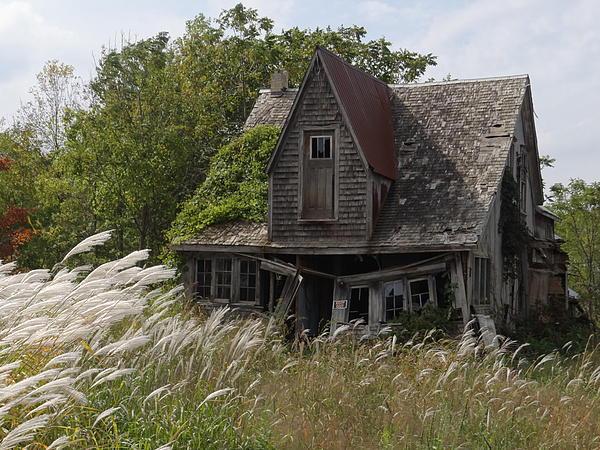
Abandoned Farmhouse - Ted Kooser


He was a big man, says the size of his shoes
on a pile of broken dishes by the house;
a tall man too, says the length of the bed
in an upstairs room; and a good, God-fearing man,
says the Bible with a broken back
on the floor below the window, dusty with sun;
but not a man for farming, say the fields
cluttered with boulders and the leaky barn.

A woman lived with him, says the bedroom wall
papered with lilacs and the kitchen shelves
covered with oilcloth, and they had a child,
says the sandbox made from a tractor tire.
Money was scarce, say the jars of plum preserves
and canned tomatoes sealed in the cellar hole.
And the winters cold, say the rags in the window frames.
It was lonely here, says the narrow country road.

Something went wrong, says the empty house
in the weed-choked yard. Stones in the fields
say he was not a farmer; the still-sealed jars
in the cellar say she left in a nervous haste.
And the child? Its toys are strewn in the yard
like branches after a storm—a rubber cow,
a rusty tractor with a broken plow,
a doll in overalls. Something went wrong, they say.

And the Ghosts - Graham Foust

The Rose that Grew From Concrete

by Tupac Shakur

Did you hear about the rose that grew
from a crack in the concrete?
Proving nature's law is wrong it
learned to walk with out having feet.
Funny it seems, but by keeping its dreams,
it learned to breathe fresh air.
Long live the rose that grew from concrete
when no one else ever cared.

I Have News for You - Tony Hoagland


There are people who do not see a broken playground swing as a symbol of ruined childhood

and there are people who don't interpret the behavior of a fly in a motel room as a mocking representation of their thought process.

There are people who don't walk past an empty swimming pool and think about past pleasures unrecoverable

and then stand there blocking the sidewalk for other pedestrians. I have read about a town somewhere in California where human beings

do not send their sinuous feeder roots deep into the potting soil of others' emotional lives

as if they were greedy six-year-olds sucking the last half-inch of milkshake up through a noisy straw;

and other persons in the Midwest who can kiss without debating the imperialist baggage of heterosexuality.

Do you see that creamy lemon-yellow moon? There are some people, unlike me and you,

who do not yearn after fame or love or quantities of money as unattainable as that moon; thus, they do not later have to waste more time defaming the object of their former ardor.

Or consequently run and crucify themselves in some solitary midnight Starbucks Golgotha.

I have news for you—there are people who get up in the morning and cross a room

and open a window to let the sweet breeze in and let it touch them all over their faces and their bodies.

Monday

Monday - Billy Collins 


The birds are in their trees,
the toast is in the toaster,
and the poets are at their windows.

They are at their windows
in every section of the tangerine of earth-
the Chinese poets looking up at the moon,
the American poets gazing out
at the pink and blue ribbons of sunrise.

The clerks are at their desks,
the miners are down in their mines,
and the poets are looking out their windows
maybe with a cigarette, a cup of tea,
and maybe a flannel shirt or bathrobe is involved.

The proofreaders are playing the ping-pong
game of proofreading,
glancing back and forth from page to page,
the chefs are dicing celery and potatoes,
and the poets are at their windows
because it is their job for which
they are paid nothing every Friday afternoon.

Which window it hardly seems to matter
though many have a favorite,
for there is always something to see-
a bird grasping a thin branch,
the headlight of a taxi rounding a corner,
those two boys in wool caps angling across the street.

The fishermen bob in their boats,
the linemen climb their round poles,
the barbers wait by their mirrors and chairs,
and the poets continue to stare
at the cracked birdbath or a limb knocked down by the wind.

By now, it should go without saying
that what the oven is to the baker
and the berry-stained blouse to the dry cleaner,
so the window is to the poet.

Just think-
before the invention of the window,
the poets would have had to put on a jacket
and a winter hat to go outside
or remain indoors with only a wall to stare at.

And when I say a wall,
I do not mean a wall with striped wallpaper
and a sketch of a cow in a frame.

I mean a cold wall of fieldstones,
the wall of the medieval sonnet,
the original woman's heart of stone,
the stone caught in the throat of her poet-lover.

Forgetfulness

The name of the author is the first to go
followed obediently by the title, the plot,
the heartbreaking conclusion, the entire novel
which suddenly becomes one you have never read,
never even heard of,

as if, one by one, the memories you used to harbor
decided to retire to the southern hemisphere of the brain,
to a little fishing village where there are no phones.

Long ago you kissed the names of the nine Muses goodbye
and watched the quadratic equation pack its bag,
and even now as you memorize the order of the planets,

something else is slipping away, a state flower perhaps,
the address of an uncle, the capital of Paraguay.

Whatever it is you are struggling to remember,
it is not poised on the tip of your tongue,
not even lurking in some obscure corner of your spleen.

It has floated away down a dark mythological river
whose name begins with an L as far as you can recall,
well on your own way to oblivion where you will join those
who have even forgotten how to swim and how to ride a bicycle.

No wonder you rise in the middle of the night
to look up the date of a famous battle in a book on war.
No wonder the moon in the window seems to have drifted
out of a love poem that you used to know by heart.

Billy Collins

The Cast


The Cast
BY CAROL LYNN PEARSON

I lost the starring part in Our Town
To Linda, a girl not half as good as me,
Who kept her eyes down
For the whole tryout, and even stuttered.

When the cast was posted
And the high school drama coach
Saw me reading it through my tears,
He put an arm around me and said,
“Now, look—things are not always as they appear.
This is not Broadway;
It’s an educational institution.
We’re here for two reasons—to put on a show,
And, more important, to help people grow.
Someday you’ll see.”

So Linda played Emily,
And she didn’t even stutter.
And I was Third Woman at the Wedding,
Watching and wondering how he knew
What she could really do
If she had the chance.

Since then I have guessed that God,
Being a whole lot smarter
Than my high school drama coach, might be offstage sometimes
With an arm around a questioning cast:
“Now, don’t try to outguess me.
Sometimes the first shall be last
And the last shall be first,
And I’ve got my own reasons.
I need some strong ones to star
And some strong ones to stand back.
And I’m going to put out front
Some you might not choose,
But you’ll see what they can really do
When they have the chance.
Mortality is an educational institution.
We’ve got to put on the show,
And, too, we’ve got to help people grow.”

As I walk through the scenes,
Watch the costumes move,
And listen to the lines
Of the powerful, the weak,
The rich, the poor,
I look at the leads with less awe than most,
And at the spear-carriers with more.

The Names

by Billy Collins

Yesterday, I lay awake in the palm of the night.
A soft rain stole in, unhelped by any breeze,
And when I saw the silver glaze on the windows,
I started with A, with Ackerman, as it happened,
Then Baxter and Calabro,
Davis and Eberling, names falling into place
As droplets fell through the dark.
Names printed on the ceiling of the night.
Names slipping around a watery bend.
Twenty-six willows on the banks of a stream.
In the morning, I walked out barefoot
Among thousands of flowers
Heavy with dew like the eyes of tears,
And each had a name --
Fiori inscribed on a yellow petal
Then Gonzalez and Han, Ishikawa and Jenkins.
Names written in the air
And stitched into the cloth of the day.
A name under a photograph taped to a mailbox.
Monogram on a torn shirt,
I see you spelled out on storefront windows
And on the bright unfurled awnings of this city.
I say the syllables as I turn a corner --
Kelly and Lee,
Medina, Nardella, and O'Connor.
When I peer into the woods,
I see a thick tangle where letters are hidden
As in a puzzle concocted for children.
Parker and Quigley in the twigs of an ash,
Rizzo, Schubert, Torres, and Upton,
Secrets in the boughs of an ancient maple.
Names written in the pale sky.
Names rising in the updraft amid buildings.
Names silent in stone
Or cried out behind a door.
Names blown over the earth and out to sea.
In the evening -- weakening light, the last swallows.
A boy on a lake lifts his oars.
A woman by a window puts a match to a candle,
And the names are outlined on the rose clouds --
Vanacore and Wallace,
(let X stand, if it can, for the ones unfound)
Then Young and Ziminsky, the final jolt of Z.
Names etched on the head of a pin.
One name spanning a bridge, another undergoing a tunnel.
A blue name needled into the skin.
Names of citizens, workers, mothers and fathers,
The bright-eyed daughter, the quick son.
Alphabet of names in a green field.
Names in the small tracks of birds.
Names lifted from a hat
Or balanced on the tip of the tongue.
Names wheeled into the dim warehouse of memory.
So many names, there is barely room on the walls of the heart.

Lines Composed Over Three Thousand Miles From Tintern Abbey


I was here before, a long time ago,

and now I am here again
is an observation that occurs in poetry
as frequently as rain occurs in life.
The fellow may be gazing
over an English landscape,
hillsides dotted with sheep,
a row of tall trees topping the downs,
or he could be moping through the shadows
of a dark Bavarian forest,
a wedge of cheese and a volume of fairy tales
tucked into his rucksack.
But the feeling is always the same.
It was better the first time.
This time it is not nearly as good.
I’m not feeling as chipper as I did back then.
Something is always missing—
swans, a glint on the surface of a lake,
some minor but essential touch.
Or the quality of things has diminished.
The sky was a deeper, more dimensional blue,
clouds were more cathedral-like,
and water rushed over rock
with greater effervescence.
From our chairs we have watched
the poor author in his waistcoat
as he recalls the dizzying icebergs of childhood
and mills around in a field of weeds.
We have heard the poets long dead
declaim their dying
from a promontory, a riverbank,
next to a haycock, within a copse.
We have listened to their dismay,
the kind that issues from poems
the way water issues forth from hoses,
the way the match always gives its little speech on fire.
And when we put down the book at last,
lean back, close our eyes,
stinging with print,
and slip in the bookmark of sleep,
we will be schooled enough to know
that when we wake up
a little before dinner
things will not be nearly as good as they once were.
Something will be missing
from this long, coffin-shaped room,
the walls and windows now
only two different shades of gray,
the glossy gardenia drooping
in its chipped terra-cotta pot.
And on the floor, shoes, socks,
the browning core of an apple.
Nothing will be as it was
a few hours ago, back in the glorious past
before our naps, back in that Golden Age
that drew to a close sometime shortly after lunch.
Billy Collins (1998, Hollander)

There But for the Grace

Wislawa Szymborska

It could have happened.
It had to happen.
It happened sooner. Later.
Nearer. Farther.
It happened not to you.

You survived because you were the first.
You survived because you were the last.
Because you were alone. Because of people.
Because you turned left. Because you turned right.
Because rain fell. Because a shadow fell.
Because sunny weather prevailed.

Luckily, there was a wood.
Luckily there were no trees.
Luckily there was a rail, a hook, a beam, a brake,
a frame, a bend, a millimeter, a second.
Luckily a straw was floating on the surface.

Thanks to, because, and yet, in spite of.
What would have happened had not a hand, a foot,
by a step, a hairsbreadth
by sheer coincidence.

So you’re here? Straight from a moment still ajar?
The net had one eyehole, and you got through it?
There’s no end to my wonder, my silence.
Listen
how fast your heart beats in me.

Translated from Polish by Stanislaw Baranczak and Clare Cavanagh

The Detroit State Poems: Marking

Tom Wayman


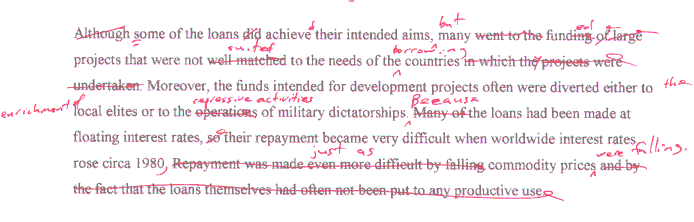
I begin each essay with a calm mind--
a fresh start.
But as I consider what they have written
I get angry: the most cursory of rereadings
would have caught this sentence fragment,
and here is a misused semicolon
after we spent more than an hour on that in class
and where I talked to this student individually
for another thirty minutes about this persistent mistake.
And instead of the simple structure of the expository paper
which we have also gone over and over
and which can be so helpful a model, a technique, a guide,
here again is a jumbled series of random observations:
trite, contradictory, obviously hurried
and spelled wrong.

My red pencil becomes enraged.
It stalks through the words,
precise, bitter, vindictive,
acting as if it is pleased to discover error
and pounce on it, hacking and destroying and rearranging,
furiously rooting out sloppiness and weakness
as though upholding some stern moral precept
against another, softer age.

But the hand gripping the pencil
begins to tremble with remorse.
It feels it has led the students on
to try to expresss themselves
and then betrayed them:
attacking what they have exposed
of their ideas and emotions.
What use is righteousness, the hand wishes to ask the pencil,
without charity?

I read the name at the top
and think of the young person whose effort this is.
Now all I see on the paper
is a face, crestfallen when I hand back what they attempted.
Eyes look up at me
apprehensively, as at a judge.
We both know my weighing of their skill
will be taken to be an assessment of themselves.

It is as though I have been asked to mark
not essays but their faces,
not sentences but who they are.
I raise my pencil, but my hand still shakes.
I want to show them what in normal English usage
is considered incorrect.
But I can not assign a grade to their eyes.

From: Did I Miss Anything? Selected Poems 1973-1993. Madeira Park, B.C. : Harbour Pub., c1993.

Hurry

Marie Howe


We stop at the dry cleaners and the grocery store
and the gas station and the green market and
Hurry up, honey, I say, hurry hurry,
as she runs along two or three steps behind me,
her blue jacket unzipped and her socks rolled down
as she likes them.

Where do I want her to hurry to? To her grave?
To mine? Where one day she might stand all grown?

Today, when all the errands are finally done, I say to her
Honey, I’m sorry I keep saying Hurry –
you walk ahead of me. You be the mother.

And Hurry up, she says, over her shoulder, looking
back at me, laughing. Hurry up now darling, she says
hurry, hurry, taking the house keys from my hands.

How to Listen

Major Jackson


I am going to cock my head tonight like a dog
in front of McGlinchy's Tavern on Locust;
I am going to stand beside the man who works all day combing
his thatch of gray hair corkscrewed in every direction.
I am going to pay attention to our lives
unraveling between the forks of his fine-tooth comb.
For once, we won't talk about the end of the world
or Vietnam or his exquisite paper shoes.
For once, I am going to ignore the profanity and
the dancing and the jukebox so I can hear his head crackle
beneath the sky's stretch of faint stars.

from Leaving Saturn, 2002
The University of Georgia Press, Athens, GA

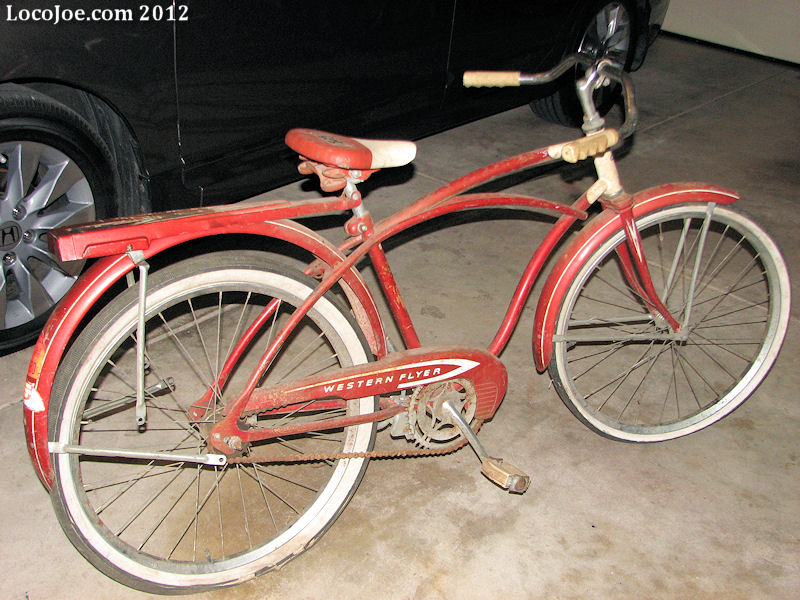
Bike Ride with Older Boys

Laura Kasischke


The one I didn't go on.

I was thirteen,
and they were older.
I'd met them at the public pool. I must

have given them my number. I'm sure

I'd given them my number,
knowing the girl I was. . .

It was summer. My afternoons
were made of time and vinyl.
My mother worked,
but I had a bike. They wanted

to go for a ride.
Just me and them. I said
okay fine, I'd
meet them at the Stop-n-Go
at four o'clock.
And then I didn't show.

I have been given a little gift—
something sweet
and inexpensive, something
I never worked or asked or said
thank you for, most
days not aware
of what I have been given, or what I missed—

because it's that, too, isn't it?
I never saw those boys again.
I'm not as dumb
as they think I am

but neither am I wise. Perhaps

it is the best
afternoon of my life. Two
cute and older boys
pedaling beside me—respectful, awed. When we

turn down my street, the other girls see me ...

Everything as I imagined it would be.

Or, I am in a vacant field. When I
stand up again, there are bits of glass and gravel
ground into my knees.
I will never love myself again.
Who knew then
that someday I would be

thirty-seven, wiping
crumbs off the kitchen table with a sponge, remembering
them, thinking
of this—

those boys still waiting
outside the Stop-n-Go, smoking
cigarettes, growing older.

from Dance and Disappear, 2002
University of Massachusetts Press, Amherst, MA

My Father's Hats

Mark Irwin


Sunday mornings I would reach
high into his dark closet while standing
on a chair and tiptoeing reach
higher, touching, sometimes fumbling
the soft crowns and imagine
I was in a forest, wind hymning
through pines, where the musky scent
of rain clinging to damp earth was
his scent I loved, lingering on
bands, leather, and on the inner silk
crowns where I would smell his
hair and almost think I was being
held, or climbing a tree, touching
the yellow fruit, leaves whose scent
was that of clove in the godsome
air, as now, thinking of his fabulous
sleep, I stand on this canyon floor
and watch light slowly close
on water I can't be sure is there.

from New Letters, Volume 66, Number 3, 2000
New Letters